Aeroscale Tracker: measuring real energy losses in cycling with RTK GPS
By Manuel Sellier
4 février 2026
The Aeroscale Tracker is an on-road measurement system designed to quantify real energy losses in cycling. Using RTK GPS, onboard sensors and near real-time analysis, it helps cyclists optimize efficiency, position and equipment beyond power alone.
The Aeroscale Tracker is a complete on-road measurement system designed to quantify real energy losses in cycling. By combining two onboard modules, a smartphone application and RTK GPS corrections, it measures in near real time the watts that do not translate into speed or altitude gain. This approach enables cyclists to objectively optimize position and equipment based on real-world efficiency rather than power output alone.
Keywords: Aeroscale Tracker, energy losses cycling, real-world performance, RTK GPS, cycling efficiency, aerodynamics, rolling resistance, Aeroscale
Aeroscale Tracker
System for measuring energy losses in cycling
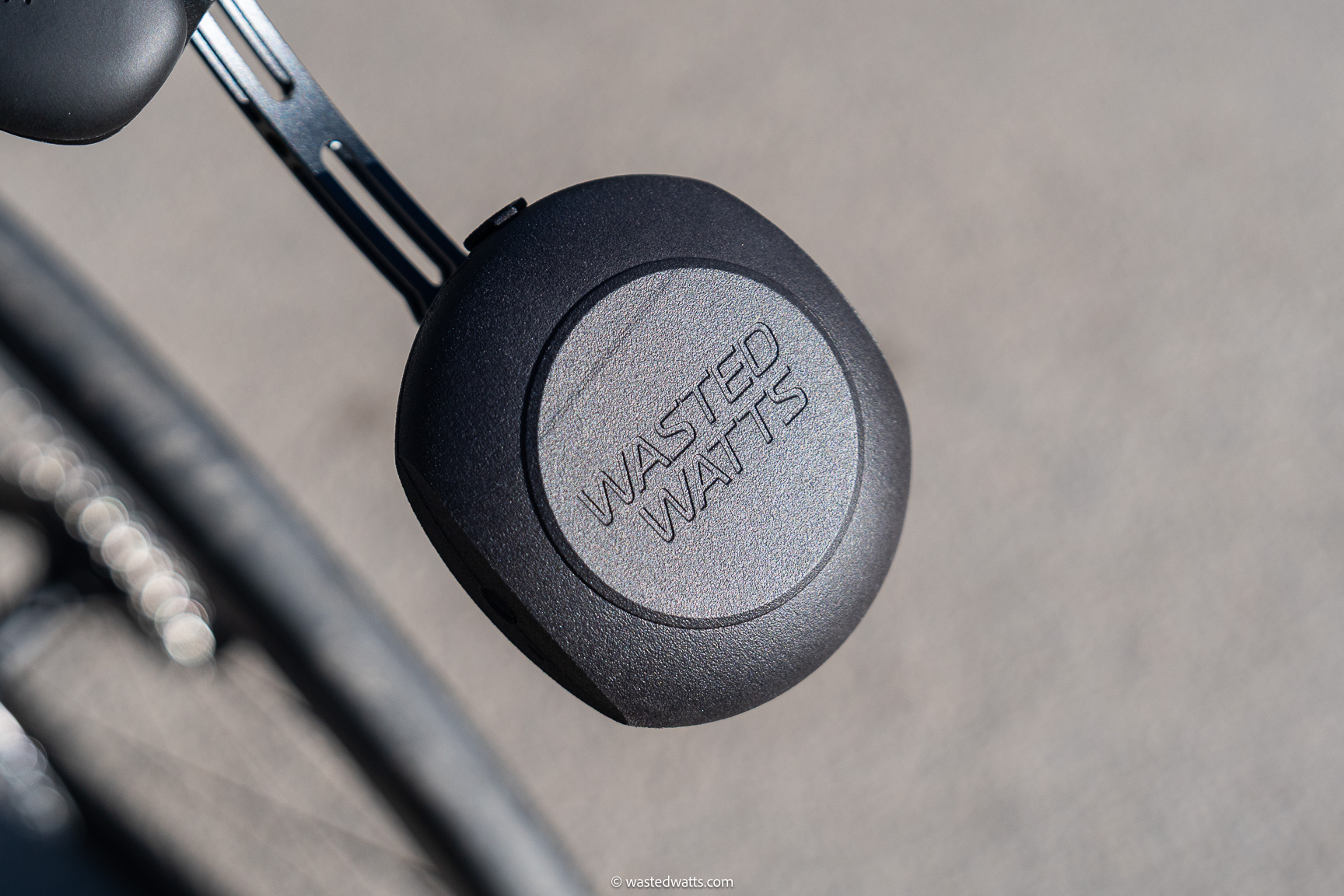
The Aeroscale Tracker is a complete system designed to measure and analyze a cyclist’s energy losses in real-world riding conditions. It is based on an architecture combining two onboard modules, a smartphone application, and access to an RTK GPS data correction service.
The system quantifies Aeroscale, meaning the energy that is lost and converted neither into speed nor altitude gain, and displays them with an almost immediate analysis delay during the ride. The Aeroscale Tracker is intended for cyclists who want to optimize their position and equipment choices based on data measured on open roads.
What the Aeroscale Tracker includes
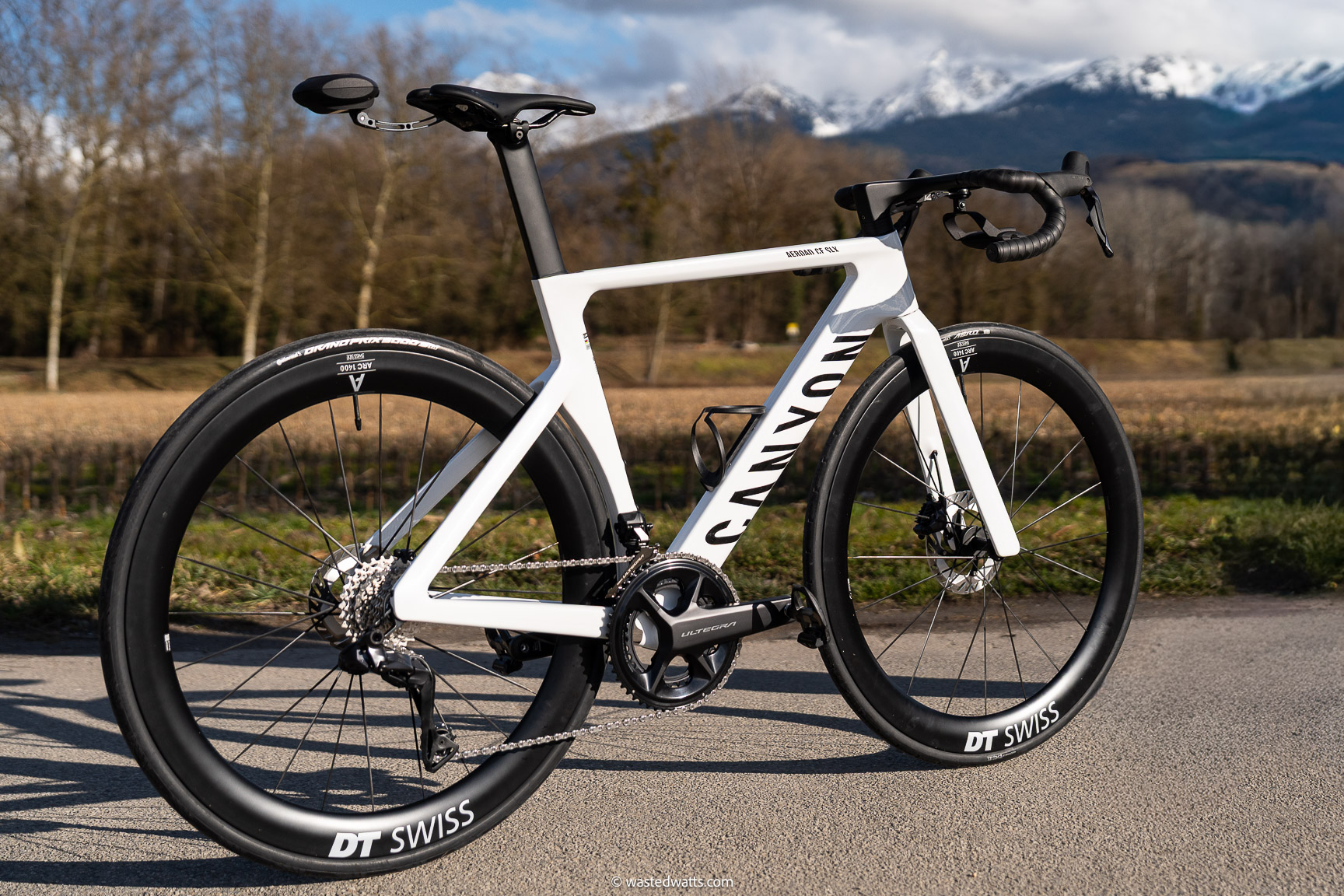
The Aeroscale Tracker is a complete system, designed to operate as a coherent whole. Each component plays a specific role in measuring energy losses in real-world conditions.
Two onboard modules mounted on the bike
Rear module
-
- Core of the system.
- Captures the power produced via the bike’s power meter.
- Measures energy variation linked to speed and altitude.
- Calculates raw Aeroscale, corresponding to watts that are actually lost.
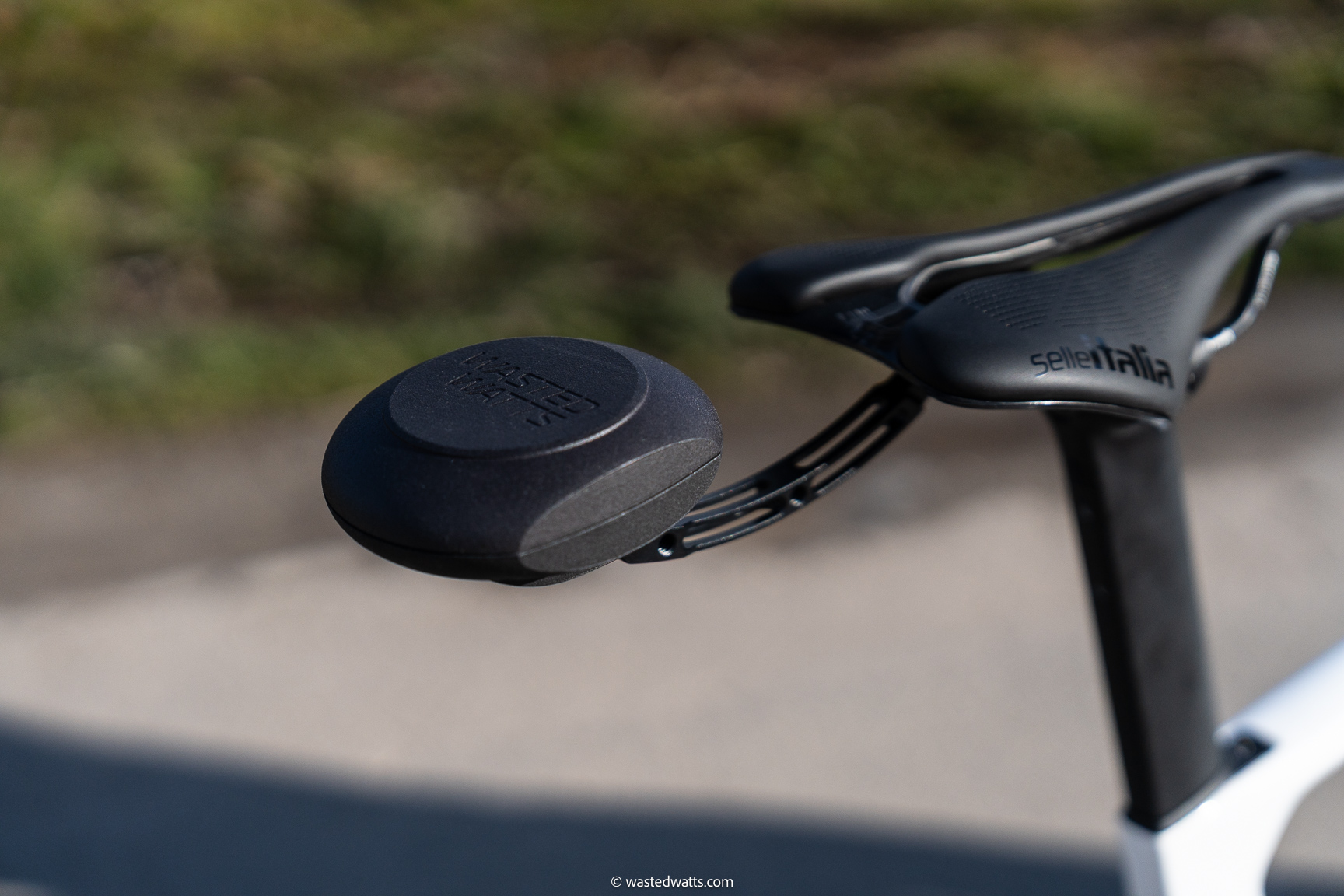
Front module
-
- Measures the true air speed encountered by the cyclist.
- Transmits these data to the rear module.
- Enables conversion of raw Aeroscale into normalized Aeroscale, independent of wind conditions.
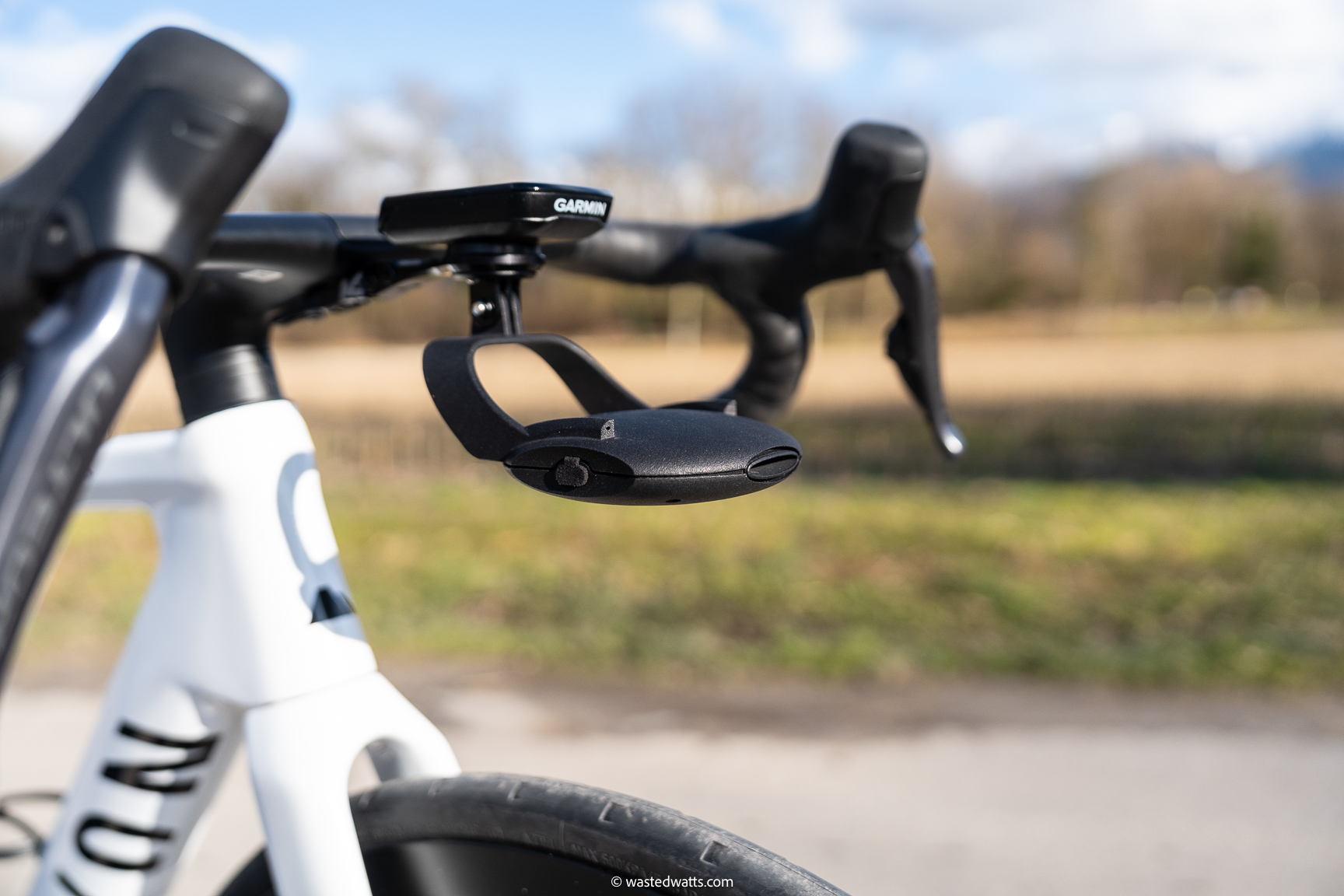
The two modules operate jointly and are designed for use on open roads.
Dedicated smartphone application
The system relies on a smartphone application that ensures:
- communication between the modules,
- reception and transmission of RTK GPS correction data,
- visualization of Aeroscale during the ride.
The smartphone acts as a data gateway, without adding complexity for the cyclist.
RTK GPS correction service (subscription)
The operation of the Aeroscale Tracker is based on RTK GPS technology.
- Access to differential corrections is provided through a data correction service available by subscription.
- This service delivers centimeter-level accuracy for position, altitude, and gradient.
- This precision is essential to reduce data smoothing and make measurements usable in near real time.
The correction service is a constitutive part of the product.
How the Aeroscale Tracker works during a ride
The Aeroscale Tracker integrates into a standard ride, without complex protocols or ideal conditions to be met.
Installation and startup
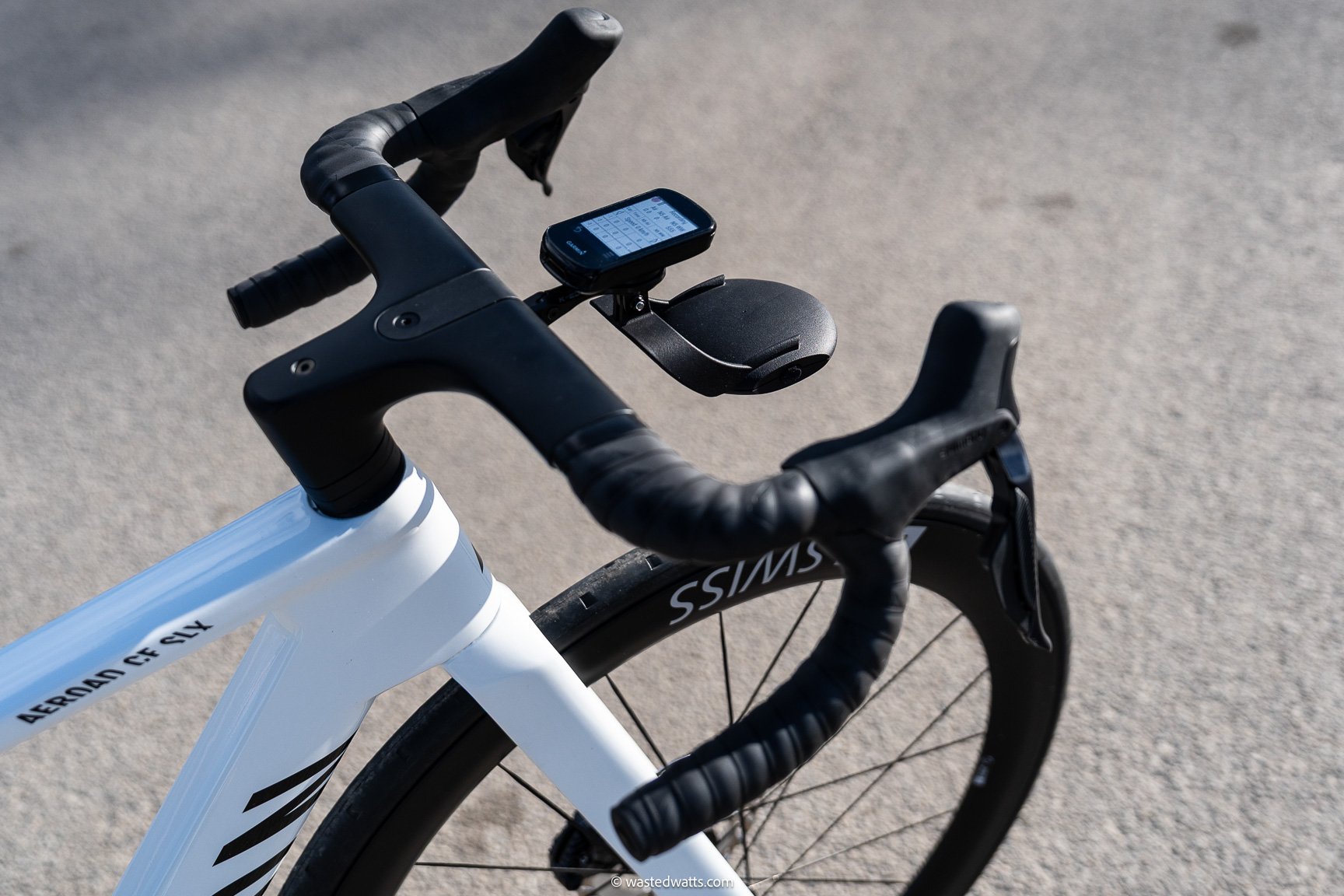
- Installation of the rear module and front module on the bike.
- Launch of the smartphone application.
- Initialization of communication between the modules, the power meter, and the RTK GPS correction service.
Data acquisition
During riding:
- The power meter measures the mechanical energy delivered at the pedals.
- The rear module measures speed, altitude, and gradient with centimeter-level precision.
- The front module measures the true air speed encountered by the cyclist.
All data are temporally synchronized by the system.
Calculation of Aeroscale
- Application of the cyclist’s energy balance equation.
- Comparison between produced energy and the variation of stored energy.
- Calculation of Aeroscale, corresponding to lost energy.
Depending on the configuration used, the cyclist can visualize raw Aeroscale or normalized Aeroscale, with an analysis delay of only a few seconds.
Data display
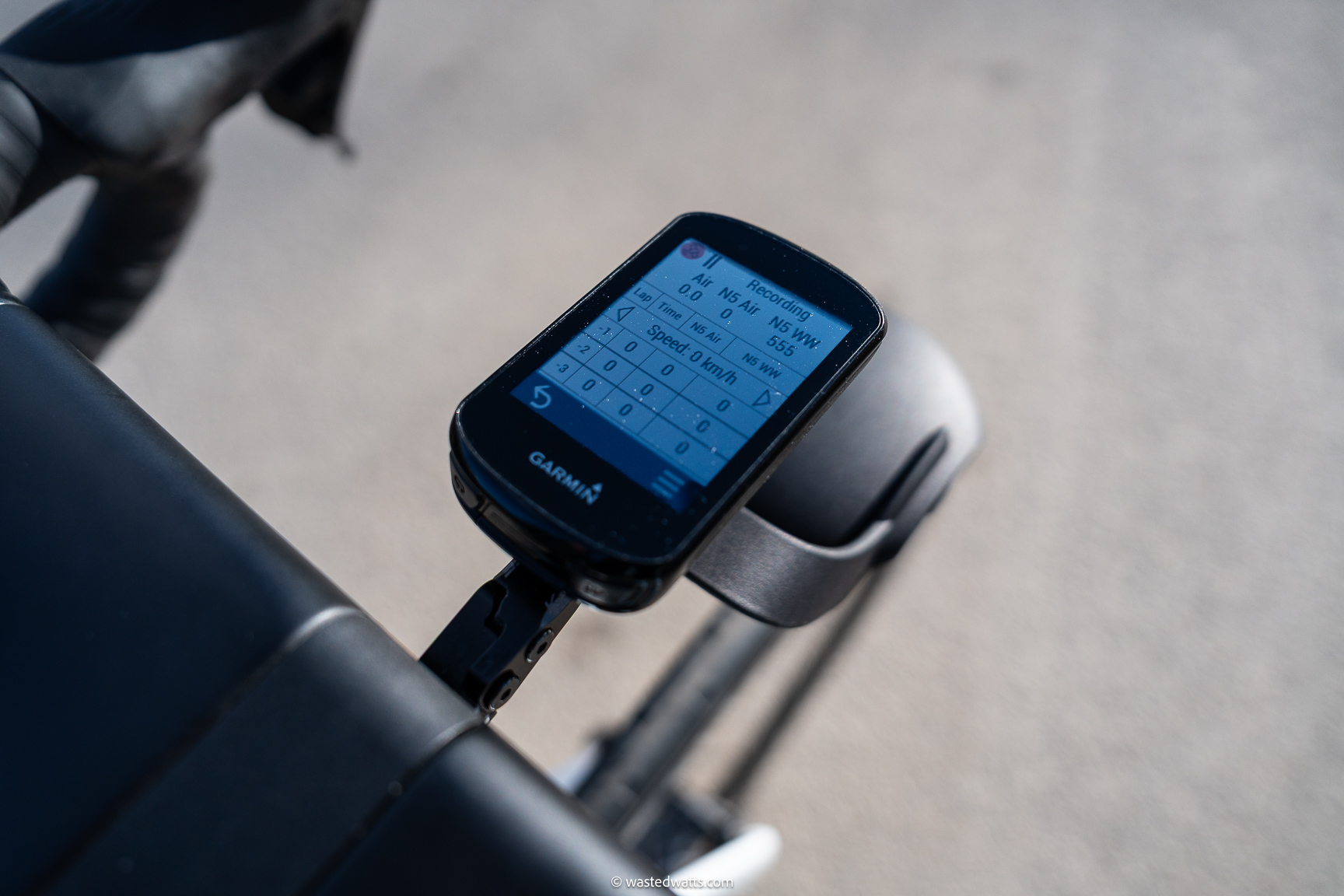
Data can be viewed:
- on the smartphone application,
- or on a compatible GPS head unit (list of compatible models to be provided).
The cyclist can adjust position, compare postures, or test equipment directly during the ride.
Compatibility & ecosystem
The Aeroscale Tracker integrates into the cyclist’s existing ecosystem.
- Interface with the bike’s power meter.
- Data display on smartphone or compatible GPS head unit.
- Use of low-bandwidth mobile connectivity for receiving RTK corrections.
A list of recommended power meters and compatible GPS head units will be communicated.
What the cyclist can measure concretely
The Aeroscale Tracker quantifies real energy losses related to the cyclist’s choices.
- Aeroscale: energy lost that is converted neither into speed nor altitude gain.
- Riding position: measurable impact of postural adjustments.
- Equipment: comparison of helmets, clothing, wheels.
- Rolling resistance: influence of tires, pressure, and surface.
- Specific configurations: luggage and load impact in gravel or long-distance riding.
Each modification results in a measurable change in Aeroscale.
Who the Aeroscale Tracker is for
The Aeroscale Tracker is intended for cyclists focused on optimization and analysis.
- Road cyclists looking to optimize position and equipment.
- Triathletes and time trial specialists seeking to analyze the efficiency of sustained positions.
- Gravel and long-distance cyclists wanting to measure the impact of load configurations.
It targets riders who want to go beyond power output alone.
Why measuring Aeroscale changes performance
Measuring Aeroscale shifts performance analysis:
- from energy production,
- to real-world movement efficiency.
This approach allows cyclists to:
- objectify sensations,
- compare configurations,
- optimize performance without increasing physiological load.
Conclusion
The Aeroscale Tracker offers a different approach to cycling performance. Designed as a complete system combining hardware, software, and service, it brings road-based analysis that was previously limited to laboratory environments. It is intended for cyclists who want to understand what truly limits their progress and optimize performance through efficiency.
Frequently Asked Questions – Aeroscale Tracker
What are Aeroscale in cycling?
Aeroscale refer to the portion of energy produced by the cyclist that does not translate into forward speed or altitude gain. They represent losses caused by aerodynamic drag, rolling resistance, posture inefficiencies and external conditions. Measuring Aeroscale makes it possible to evaluate real-world efficiency rather than power output alone.
How does the Aeroscale Tracker measure energy losses on the road?
The Aeroscale Tracker combines power data, centimeter-accurate RTK GPS measurements and true air speed data. By applying the cyclist’s energy balance equation, it compares produced energy with actual changes in speed and altitude to calculate the watts that are effectively lost during real riding conditions.
Why is RTK GPS necessary for measuring Aeroscale?
RTK GPS provides centimeter-level accuracy for position, altitude and gradient. This precision is essential to reduce data smoothing and noise, allowing energy losses to be calculated and displayed with only a few seconds of delay. Without RTK correction, real-time analysis of Aeroscale would not be reliable.
Can Aeroscale be displayed during the ride?
Yes. Depending on the configuration, Aeroscale can be viewed in near real time either on the dedicated smartphone application or on a compatible GPS head unit. This allows cyclists to adjust their position, test equipment or compare postures directly during the ride.
Who is the Aeroscale Tracker designed for?
The Aeroscale Tracker is designed for cyclists focused on optimization and analysis, including road cyclists, triathletes, time trial specialists and gravel or long-distance riders. It is intended for athletes who want to go beyond power data and understand how efficiently their energy is converted into motion.